JAP KEVIN SUSANTO

I would recommend Sekolah Ciputra. It provides you with the necessary environment for you to flourish (make use of it).”

JAP KEVIN SUSANTO
GRADUATED: 2021

1. How long were you in Sekolah Ciputra? Starting from what grade until what grade?
From Grade 3 through to IBDP graduation in 2021. 10 years.

2. After graduating from Sekolah Ciputra, where do you study? What is your major?
I had options — applied for Aerospace Engineering, Physics, and Law at the University of Sydney. Also threw applications at Tsinghua, Tokyo, and UBC in Vancouver. The pandemic made everything chaotic, border policies were shifting weekly, so my family and I played it safe: Sydney had the strongest ranking in the southern hemisphere and felt like the most stable bet during uncertain times. I started in Law and Criminology — seemed to fit my skill set after auditing some engineering courses. But then I took this unit called “Human Development and Education”. The professor opened with pedagogical theory, cognitive science, how people actually learn and inspired me. I realized education isn’t just “teaching”, it’s this massive intersection of psychology, sociology, policy, and human behavior. Switched majors, never looked back. Ended up with a double degree: Bachelor of Arts (Sociology and Education) and a Bachelor of Advanced Studies (Education) with First Class Honours.

3. What did you do after graduating from university?
– Honours year requires a publication-level dissertation, so I naturally slid into research. Became an assistant teacher to my supervisor, then landed a formal research assistant position under Professor Helen Watt — she’s a fellow of the Australian Academy of Social Sciences and Oxford academic, so not a bad person to learn from.
– Then December last year, my mentor from Tsinghua University (met her during my third-year exchange) called with an opportunity: a research grant with a visiting scholar position attached. That’s where I am now — working on national-level projects, Tsinghua collaborations, and several publications. Still tutoring, still researching, just now doing it across two continents.

4. What is your current occupation?
Assistant researcher, assistant tutor, and visiting scholar — currently splitting time between the University of Sydney and Tsinghua University.

5. In what way did Sekolah Ciputra contribute to your job right now?
Foundation. Sekolah Ciputra gave me the intellectual scaffolding I use daily — especially Theory of Knowledge and Philosophy HL. Those courses built how I think about thinking. The multilingual environment trained my ear for language acquisition. And that unique mix of local and international teachers? That’s where I learned to navigate cultural nuances essential for the anthropological side of my research now.

6. What was the best thing about Sekolah Ciputra? Tell us something memorable from your time at Sekolah Ciputra
The teachers.
– Mr. Diko, our grade level manager; he had this philosophy of “make it hard.” Trekking through waterfalls, crossing rivers, camps that pushed us to our limits. He taught us to sit with discomfort, to think through problems instead of around them. Some of my closest friendships were forged in those ridiculous river crossings.
– Mr. Peter Crosby’s TOK and Philosophy classes, that’s where I learned that knowledge shifts, that bias isn’t something you eliminate but something you account for.
I mention them first because they’re still at Sekolah Ciputra. But there were others who left marks: Ms. Greene, Mrs. Chan, Mr. Stuart, Mr. Yang — each pushed me exactly where I needed pushing.

7. What advice would you give to a graduating student?
Don’t be boring. Do the hard things, the only reward you get for taking it easy is the fact that in the moment it’s easier. Challenge the discourse that seemingly dictates your life.

8. Would you recommend Sekolah Ciputra to others? If yes, what would you say about it?
I would recommend Sekolah Ciputra to others, but with a major caveat. You cannot expect the IB or the teachers to do everything for you or your children. Education is a fundamental human issue, a complex system of interactions and results. Sekolah Ciputra provides you with the necessary environment for you to flourish only if you make use of it at every turn. But the school can’t predict the turns for you. That’s up to you and parents who need to be aware of them.

9. What do you enjoy doing in your free time?
Competitive gaming placed top 150 globally with my team. I take gym and weightlifting quite seriously (5 days a week). I also do calligraphy and I go to the local museum or zoos quite often, whenever I’m traveling or have a free day. 
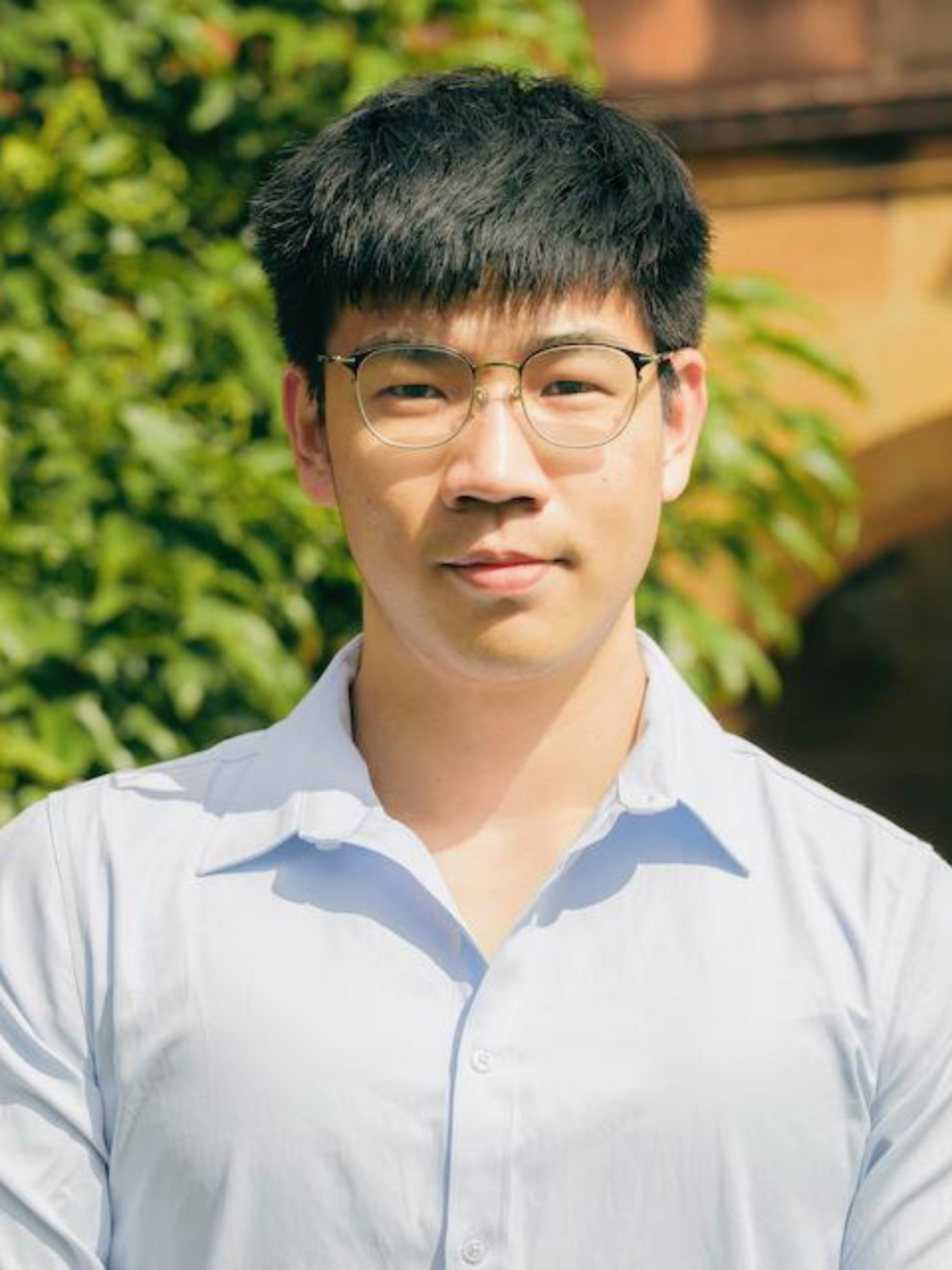
JAP KEVIN SUSANTO

I would recommend Sekolah Ciputra. It provides you with the necessary environment for you to flourish (make use of it).”

JAP KEVIN SUSANTO
GRADUATED: 2021

1. How long were you in Sekolah Ciputra? Starting from what grade until what grade?
From Grade 3 through to IBDP graduation in 2021. 10 years.

2. After graduating from Sekolah Ciputra, where do you study? What is your major?
I had options — applied for Aerospace Engineering, Physics, and Law at the University of Sydney. Also threw applications at Tsinghua, Tokyo, and UBC in Vancouver. The pandemic made everything chaotic, border policies were shifting weekly, so my family and I played it safe: Sydney had the strongest ranking in the southern hemisphere and felt like the most stable bet during uncertain times. I started in Law and Criminology — seemed to fit my skill set after auditing some engineering courses. But then I took this unit called “Human Development and Education”. The professor opened with pedagogical theory, cognitive science, how people actually learn and inspired me. I realized education isn’t just “teaching”, it’s this massive intersection of psychology, sociology, policy, and human behavior. Switched majors, never looked back. Ended up with a double degree: Bachelor of Arts (Sociology and Education) and a Bachelor of Advanced Studies (Education) with First Class Honours.

3. What did you do after graduating from university?
– Honours year requires a publication-level dissertation, so I naturally slid into research. Became an assistant teacher to my supervisor, then landed a formal research assistant position under Professor Helen Watt — she’s a fellow of the Australian Academy of Social Sciences and Oxford academic, so not a bad person to learn from.
– Then December last year, my mentor from Tsinghua University (met her during my third-year exchange) called with an opportunity: a research grant with a visiting scholar position attached. That’s where I am now — working on national-level projects, Tsinghua collaborations, and several publications. Still tutoring, still researching, just now doing it across two continents.

4. What is your current occupation?
Assistant researcher, assistant tutor, and visiting scholar — currently splitting time between the University of Sydney and Tsinghua University.

5. In what way did Sekolah Ciputra contribute to your job right now?
Foundation. Sekolah Ciputra gave me the intellectual scaffolding I use daily — especially Theory of Knowledge and Philosophy HL. Those courses built how I think about thinking. The multilingual environment trained my ear for language acquisition. And that unique mix of local and international teachers? That’s where I learned to navigate cultural nuances essential for the anthropological side of my research now.

6. What was the best thing about Sekolah Ciputra? Tell us something memorable from your time at Sekolah Ciputra
The teachers.
– Mr. Diko, our grade level manager; he had this philosophy of “make it hard.” Trekking through waterfalls, crossing rivers, camps that pushed us to our limits. He taught us to sit with discomfort, to think through problems instead of around them. Some of my closest friendships were forged in those ridiculous river crossings.
– Mr. Peter Crosby’s TOK and Philosophy classes, that’s where I learned that knowledge shifts, that bias isn’t something you eliminate but something you account for.
I mention them first because they’re still at Sekolah Ciputra. But there were others who left marks: Ms. Greene, Mrs. Chan, Mr. Stuart, Mr. Yang — each pushed me exactly where I needed pushing.

7. What advice would you give to a graduating student?
Don’t be boring. Do the hard things, the only reward you get for taking it easy is the fact that in the moment it’s easier. Challenge the discourse that seemingly dictates your life.

8. Would you recommend Sekolah Ciputra to others? If yes, what would you say about it?
I would recommend Sekolah Ciputra to others, but with a major caveat. You cannot expect the IB or the teachers to do everything for you or your children. Education is a fundamental human issue, a complex system of interactions and results. Sekolah Ciputra provides you with the necessary environment for you to flourish only if you make use of it at every turn. But the school can’t predict the turns for you. That’s up to you and parents who need to be aware of them.

9. What do you enjoy doing in your free time?
Competitive gaming placed top 150 globally with my team. I take gym and weightlifting quite seriously (5 days a week). I also do calligraphy and I go to the local museum or zoos quite often, whenever I’m traveling or have a free day.